Showing posts with label Film Comment. Show all posts

CINEMAPS' BEST OF 2019: All the pain, all the gains

submit to reddit

Parasite
I know I'm saying this every year, but it's especially true this year: life was exceedingly stretched for me, and as a result, my film watching time shrunk significantly. Without the Toronto International Film Festival, I don't know if I would have had anything to write for this post. I removed myself almost completely out of the awards season loop once I realized that it was going to be a bloodbath. I have less than zero interest in debating the political correctness of awarding films. As usual, my picks reflect my love and admiration for the films and their various features. The most political thing I would look at is a film's relevance and message to our time. Without further ado, here is the year in film for me:

Pain and Glory

CINEMAPS' TOP 10
01. Dolor y gloria (Pain and glory; Almodóvar) ****1/2 A devastating look at a life that has an undercurrent of both pain and beauty (my alternate title for the film). The pangs of regrets, to love and to have lost, embraced and escaped - all were sobering and filled with shades of light in this Almodóvar magnum opus. Antonio Bandaras was heartbreaking, and Penelope Cruz was just so radiant. Glorious.

02. Apollo 11 (Miller) ****1/2 I saw this in IMAX and it was transcendental. I was so moved by humanity's hope, and awash with sadness that we live in a time depleted with this much sense of collective wonder.

03. Om det oändliga (About endlessness; Andersson) ****1/2 I'm rapidly becoming a huge Andersson's fan. I picked this film to see at TIFF based on it being directed by him, despite not being all that keen on the synopsis that spoke to it being more of a series of vignettes. The existential angst and humour continued to lead the way, threading through various straight-face set ups. Theatrical, sad, absurdly funny, and just all around brilliant.

04. Synonymes (Synonyms; Lapid) **** The kinetic energy was so bold and infectious, it reminded me of the early (fun) Godard cinema. The film had lots to say about belonging and rootlessness, wrapped in the complexities of immigration and integration. It played almost like a satire in some ways. The scene with the citizenship class was so precise in its commentary, it was painful to sit through. And yet, the whole sequence developed in such surprising ways that one could not help but be glued to what was going to happen next. Exciting filmmaking.

05. Parasite (Bong) **** So much fun. Despite some of the more obvious over-the-head scenes, the picture was assuredly directed and Bong made certain his characters were highly accessible to the audience.

06. Jojo rabbit (Waititi) **** I love this movie more than probably most people, and I love this cast so, so much. Its sweetness at the core moved me to cry so many rivers. It's probably Waititi's most accomplished picture yet.

07. Marriage story (Baumbach) **** This should be mandatory viewing for those going through a divorce or about to go through/thinking of one. It was scarily accurate and heartbreaking in its earnestness. Scarlet Johansson was good, but the way that the script unfolded made sure that the film belonged to Adam Driver.

08. EMA (Larraín) ***1/2 Hypersexualized and daring in ways that most films featuring female protagonists would not attempt. Forget Joker, see EMA instead for the modern portrait of an intensely magnetic anti-hero whose edges defied moral conventions. If nothing else, see it for the dances!  

09. Atlantique (Atlantics; Diop) ***1/2 A unique and hypnotizing tale of young love in the time of separation and disconnect. The mystical, supernatural part of the story was seamlessly woven into the reality of life in the dust of industry and progress. Notably, the 'haunted' people were not treated as something to be scared of; rather, they were like ancestral ghosts coming back to make things right with their naughty relatives.

10. Ford v Ferrari (Mangold) ***1/2 Wonderful casting made this movie better than it would have been otherwise. I thoroughly enjoyed the car racing sequences, but it was Bale whose commitment elevated the material and centered the film's emotional core.

Apollo 11
Grin and Pulse
The most fun I had watching a movie this past year
Apollo 11
Parasite
Jojo Rabbit
Ford v Ferrari
Knives out

Frames
Impressive, memorable staging of a shot or series of shots
Night time shelling, 1917
Jojo ties his mother's shoe, Jojo Rabbit
Ema's crew dancing, EMA
Mallo & his mother wake up in an empty building, Pain & Glory
Soldiers in a line walking in the snow, About endlessness

Director
Confident storytelling, with a touch of "wow"
Pedro Almodóvar, Pain and Glory
Taika Waititi, Jojo Rabbit
Bong Joon-ho, Parasite
Roy Andersson, About Endlessness
Nadav Lapid,  Synonyms


Performance
I feel you

Scarlet Johansson, Jojo Rabbit
Adam Driver, Marriage Story / Star Wars: the rise of Skywalker  
Antonio Banderas, Pain and glory
Carol Duarte, The invisible life of Eurídice Gusmão
Leonardo Di Caprio, Once upon a time in Hollywood

Mariana Di Girolamo, EMA
Christian Bale, Ford v Ferrari
Joaquin Phoenix, Joker   
Roman Griffin Davis, Jojo Rabbit
Lupita Nyong'o, Us

Writing
Create interesting, layered, cohesive universe; would make for a great read on its own
Pedro Almodóvar, Pain and glory
Taika Waititi, Jojo Rabbit
Bong Joon-ho, Parasite
Noah Baumbach, Marriage story
Fernando Meirelles, The two popes 


1917 Night battle behind the scene
Editing
Interesting, effective cuts and stitches that support and move the story visually
Apollo 11
Parasite
Synonyms
Jojo Rabbit
Ford v Ferrari

Cinematography
Takes my breath away
1917 
Pain and glory
About endlessness
EMA
Once upon a time in Hollywood

About Endlessness
Art Direction / Production Design
Transportive, impactful set design
Parasite
Pain and glory
About endlessness
Jojo Rabbit
Once upon a time in Hollywood

Effects
Movie Magic
Star Wars: the Rise of Skywalker
Ford v Ferrari
Spiderman: Far from home
Us
Another beautiful day in the neighborhood


Sound
Amplify the visuals and enrich my sensory experience
1917
Ford v Ferrari
Joker
Us
EMA

Score
Was it memorable?
EMA
1917
Parasite
Ford v Ferrari

Stray comments:
- Buckets of tears ranking: Pain and glory (regret scene), Apollo 11 (all the moon footages), Jojo Rabbit (Jojo with his mother), Another beautiful day in the neighborhood (death 'anything human is mentionable, anything mentionable is manageable'), Marriage story, Star Wars: the Rise of Skywalker (Chewie, Kylo 'I know what I'm supposed to do but I'm not sure I can do it')
- Totally did not expect to like Skywalker as much as I did, and a large part of it was Adam Driver's performance as Kylo Ren
- Scarlet Johansson's role in Jojo Rabbit is the most tailor made for her as a movie star as I've ever seen - she was absolutely stunning in it
- Newcomer George McKay was great in 1917, even though I don't have room on my top 10 for him
- Speaking of performances, Charlize Theron kills it as Megyn Kelly but I think half of that is prosthetics' work
- So sad about Dark Phoenix - what a waste of a cast!
- What the heck is with all the straight-to-Netflix films like Earthquake Bird and 6 Underground?
- Ana de Armas is MADE for the big screen; so is Mariana Di Girolamo, who commands and wills her film into being 
- Everyone should watch Marriage Story, for the intricacies of a dissolution of a well intentioned relationship
- Little Women was good but Greta made a better movie in Lady Bird.

Uncharted  
Films I'm intending to see that could make a dent on the list above
They shall not grow old
Climax
Judy
The lighthouse
Booksmart
The farewell
Midsommar
Doctor sleep
Honey boy
Dark waters
Portrait of a lady on fire
Queen and slim
Clemency
A hidden life
In Fabric
Varda by Agnès
The kingmaker
The cave

Charted
Ranked out of *****
****1/2
Pain and Glory (Almodóvar)
Apollo 11 (Miller)
About Endlessness (Andersson)

****
Synonymes (Synonyms; Lapid)
Parasite (Bong)
Jojo Rabbit (Waititi)
Marriage story (Baumbach)

***1/2  
EMA (Larraín)
Atlantics (Diop)
Ford v Ferrari (Mangold)
Us (Peele)
I was at home, but ... (Schanelec)
Once upon a time in Hollywood (Tarantino)
Star Wars: the Rise of Skywalker (Abrams)
1917 (Mendes) 
Uncut gems (Safdie & Safdie)
American Factory (Reichert & Bognar)
Another beautiful day in the neighborhood (Heller)

***
Knives out (Johnson)
The two popes (Meirelles)
Toy story 4 (Cooley)
Martin Eden (Marcello)
Little Women (Gerwig)
Rocketman (Fletcher)
Bombshell (Roach)
The Irishman (Scorsese)
J'ai perdu mon corps (I lost my body; Clapin)

**1/2
Ad astra (Gray)
Avengers: end game (Russo & Russo)
Spiderman: far from home (Watts)
A vida invisível (The invisible life of Eurídice Gusmão; Aïnouz)
Joker (Phillips)
John Wick 3: parabellum (Stahelski)
Dolemite is my name (Brewer)
Captain Marvel (Boden & Fleck)

**
The report (Burns)
The laundromat (Soderbergh) 
Stuber (Dowse)

*
6 Underground (Bay)
The operative (Adler)
Earthquake bird (Westmoreland)
Dark phoenix (Kinberg)

Read More...

CINEMAPS' BEST OF 2017: Les Enfants Terribles

submit to reddit

The Florida Project
It's the year of the chillun! Probably poetically fitting that we had this many child-acting breakthroughs in the same year an adult-child wreaked havoc in the White House? Too bad AMPAS ignored these performances. Fear not, kids, I'm here to give you mentions and go where no one cares. Literally (because no one cares about this list but me). Bright futures you'll all have though! And, to mark the crazy year that was 2017, we also had some pretty outrageous sequences committed to the big screen: the 'performance art installation' in The Square (actually, everything The Square), the 'battle' in mother!, the botched 'attempt' (can't do spoiler) and slaughter scenes in On Body and Soul, the 'spin-and-pick-off' problem-solving attempt in The Killing of the Sacred Deer, and not to be outdone, the heavy-metal headbanging nuns of Jeannette the Childhood of Joan of Arc. The following picks are my final words for this year in film, uncharted films notwithstanding.

CINEMAPS' TOP 10
The other side of hope
01. Toivon tuolla puolen (The other side of hope; Kaurismäki) ****1/2 Relevant, hysterical, damning, moving, hopeful (yes, I must use it), and masterfully crafted: I wish this humanistic tale about the struggles to make it together and the compassion born out of these struggles would be seen more widely. We need this.

02. Get out (Peele) **** The best darn time I had at the theatre with an audience last year was at the Get Out screening. I'm not sure how much of that coloured my perception of this film, but I'm pretty certain its wit and Peele's balls-to-the-wall approach were not accidental.

03. Dunkirk (Nolan) ****The technical marvel of the year, I must say. This was a tense ride, unforgiving and yet triumphant at the same time. I love what he did with the timelines. Again with the timeline! Methinks Nolan is a twee bit obsessed with time.

04. The Square (Östlund) **** Shocking and hilarious. You must forgive its choice of targets, simply for the outrageous way it brought a canon to a slingshot practice. Its bigger theme of disconnection is worthy of a conversation.

05. The Killing of a Sacred Deer (Lanthimos) **** Another off kilter tale from the land of Lanthimos, where people just act out their psychological state and the whole world's emotions are as plain as day. Colin Farrell again delivers such a good performance here. He belongs in this universe.

06. The Beguiled (Coppola) **** This film was sweating off the screen; there was something very dirty about the whole deal, despite its beautiful setting and the fantastic people populating it. One could make a double-header evening with this one and Get out, and call it "White people have issues" night out.

07. Zama (Martel) **** Epic, beautifully shot film spanning multiple physical and spiritual journeys, crafted by an Argentinian woman to boot!

08. Blade Runner: 2049 (Villeneuve) ***1/2 This odd, contemplative film will find its rightful audience in due time. People forgot how dark and deliberating the original Blade Runner was huh?

09. Lady Bird (Gerwig) ***1/2 Often, characters develop throughout the course of a film, and we grow along with them. This was a rare bird in that its characters didn't really change, but we grew from observing their plumage anyway. Witness (possible spoiler): watch Laurie Metcalf's all-too-familiar mother figure go through her relationship with Lady Bird, and may be you, too, will be transformed as I did, no matter her character arc.

10. Phantom Thread (Anderson) ***1/2 A delicate, meticulous film that stays with you, propelled by sheer excellence in craftsmanship from all the people involved.

Get out
Grin and Pulse
The most fun I had watching a movie this past year
Get out
Jeannette, l'enfance de Jeanne d'Arc (Jeanette, The Childhood of Joan of Arc)
Toivon tuolla puolen (The other side of hope)
Atomic Blonde
Baby Driver

Frames
Impressive, memorable staging of a shot or series of shots
A cow's gaze at the people through its pen, awaiting certain fate, On Body and Soul
Coffee run sequence, Baby Driver
Red salt dispersed from the fighter planes, Star Wars: the last Jedi
Georges Laurent rolling himself through the street, camera is at a distant, Happy End
Mr. Woodcock watches Alma through a keyhole, and she sees him, Phantom Thread

Director
Confident storytelling, with a touch of "wow"
Aki Kaurismäki, Toivon tuolla puolen (The other side of hope)
Christopher Nolan, Dunkirk
Sofia Coppola, The Beguiled
Lucrecia Martel, Zama
Paul Thomas Anderson, Phantom Thread

Dafne Keen in Logan
Performance
I feel you
Child actors: Dafne Keen, Logan; Ahn Seo-hyun, Okja; Lise Leplat Prudhomme, Jeanette, The Childhood of Joan of Arc; Brooklynn Prince, The Florida Project; Fantine Harduin, Happy End

Adult actors: Frances McDormand, Three billboards outside Ebbing, Missouri 
Daniel Day Lewis, Phantom Thread  
Maryana Spivak, Loveless
Jennifer Lawrence, mother!
Colin Farrell, The killing of a sacred deer and The Beguiled

Laurie Metcalf, Lady Bird
Daniel Kaluuya, Get out
Cate Blanchett, Thor: Ragnarok   
Meinhard Neumann, Western
Willem Dafoe, The Florida Project

Writing
Create interesting, layered, cohesive universe; would make for a great read on its own
Sofia Coppola, The Beguiled
Yorgos Lanthimos, The Killing of a Sacred Deer
Ruben Östlund, The Square
Greta Gerwig, Lady Bird
Jordan Peele, Get out 


Zama
Editing
Interesting, effective cuts and stitches that support and move the story visually
Dunkirk
Baby Driver
Toivon tuolla puolen (The other side of hope)
Zama
mother!

Cinematography
Takes my breath away
Blade Runner: 2049 
Zama
Toivon tuolla puolen (The other side of hope)
The Beguiled
Dunkirk

Blade Runner: 2049
Art Direction / Production Design
Transportive, impactful set design
Blade Runner: 2049
The Shape of Water
The Beguiled
Ghost in the Shell
The Other side of hope

Effects
Movie Magic
Blade Runner: 2049
Star Wars: The Last Jedi
mother!
Kong: Skull Island
Ghost in the Shell


Sound
Amplify the visuals and enrich my sensory experience
Dunkirk
Blade Runner: 2049
Baby Driver
Zama
Star Wars: The Last Jedi

Score
Was it memorable?
Jeannette, l'enfance de Jeanne d'Arc (Jeanette, The Childhood of Joan of Arc)
Dunkirk
Baby Driver

Stray comments:
- I, Tonya was more fun than I thought it would be.
- Ryan Gosling is endlessly watchable.
- I was a little obsessed with James McAvoy in 2017; I blame having seen him in person at TIFF, and his role in Submergence definitely helped.
- Atomic Blonde kicked some serious butt.
- A ghost story had an awesome way of approaching the concept of ghosts.
- The Big Sick was sweet but underwhelming due to Aziz Ansari's trailblazing series.
- I've sworn off pork, on top of beef, for 2017 (and still going), thanks to Okja and Body and Soul
- Lady Bird changed how I saw (some) moms.
- I liked Jedi and Adam Driver enough to overlook the glaring fault of Kylo Ren's motive.
- Reality check: brutal divorced couples spat in Loveless, Halley's style of mothering in The Florida Project - seen 'em in real life.
- mother! was a wild ride of a woman's perception of her (mis)treatment by the world - can't see it as anything but the interior of a woman flipped inside out.
- Thor was underrated for how it gave wonderful female characters: Tessa Thompson was so awesome as Valkyrie, and Cate Blanchett was the sexiest villain anywhere, and at her most commanding of screen presence since Carol ("kneel," yes ma'am!); there was also Korg.
- Guardians of the Galaxy 2 disappointed.
- Logan Lucky was a lot of fun, and Daniel Craig was a hoot.
- Logan was surprisingly cool.
- The Beguiled was so well cast.
- Wonder Woman had an amazing trailer and very charming leads, but she deserved a better last third of the film (it devolved into a series of terrible, forgettable 'special' effects).
- The Shape of Water was lightweight del Toro.
- Three Billboards had a slight misjudgment in handling thorny issues outside of grief and vengeance, but on its main theme, it was on point.
- Mudbound was a slug and ultimately too TV-movie of the week to be great; however, I did cry quite a bit watching it, due to sheer anger and sadness at the injustice of it all; Garrett Hedlund was fantastic in it.
- Armie Hammer was the ultimate golden All-American boy in Call me by your name, if there ever was one; really loved the film for its location mostly, I'm afraid, and maybe Michael Stuhlbarg's speech at the end.
- The suggestive post-ending of the Post was probably the best part of the film.
- The disaster artist was funny to watch and quote, but forgettable after a few days.
- The disaster that was Superman's face in Justice League was unreal. Literally.
- Sad about the squashed potential of Ghost in the Shell.

Uncharted  
Films I'm intending to see that could make a dent on the list above
Maudie
War of the Planet of the Apes
Detroit
Wind river
First they killed my father
Loving Vincent

Charted
Ranked out of *****
****1/2
Toivon tuolla puolen (The other side of hope; Kaurismäki)

****
Get out (Peele)
Dunkirk (Nolan)
The Square (Östlund)
The Killing of a Sacred Deer (Lanthimos)
The Beguiled (Coppola)   
Zama (Martel)

***1/2 
Blade Runner: 2049 (Villeneuve)
Lady Bird (Gerwig)
Phantom Thread (Anderson)
Jeannette, l'enfance de Jeanne d'Arc (Jeanette, The Childhood of Joan of Arc; Dumont)
Logan (Mangold)
On Body & Soul (Enyedi)
Makala (Gras)
The nothing factory (Pinho)
I, Tonya (Gillespie)
The Florida Project (Baker)
Call me by your name (Guadagnino)
Logan Lucky (Soderbergh)
Baby Driver (Wright)
The death of Stalin (Iannucci)
Western (Grisebach)
mother! (Aronofsky)
Loveless (Zvyagintsev)
Happy end (Haneke)
Atomic Blonde (Leitch)

***
A ghost story (Lowery)
The Post (Spielberg)
Three billboards outside Ebbing, Missouri (McDonagh)
Mudbound (Rees)
The Shape of Water (del Toro)
The third murder (Koreeda)
The Big Sick (Showalter)
It (Muschietti)
Spiderman: Homecoming (Watts)
Okja (Bong)
Split (Shyamalan)
Star Wars: The Last Jedi (Johnson)

**1/2
Submergence (Wenders)
Thor: Ragnarok (Waititi)
Wonder Woman (Jenkins)
The disaster artist (Franco)
Guardians of the Galaxy Vol. 2 (Gunn)
Coco (Unkrich)
Kedi (Torun)
Ghost in the shell (Sanders)
Alien: Covenant (Scott)
Justice League (Snyder)

**
The Dark Tower (Arcel)
Kong: Skull Island (Vogt-Roberts)
Mummy (Kurtzman)
Gaga: Five foot two (Moukarbel)

*
The Great Wall (Zhang)
American Assassin (Cuesta)

Read More...

TIFF 2015 reviews: Dheepan, exorcising the psychological wound

submit to reddit


Let me tell you about the surface narrative of the film for a bit. Then, I'll tell you about the other story I got out of Dheepan.

This Palm D'or winner from Jacques Audiard is constructed with a clear, traditional three parts arc. In the beginning, we see a Tamil Tiger soldier seeking escape from death and destruction in his home land. That journey begins with a necessary lie: he arrives in France with a family not his own, cobbled together from the ruins of survivors, the witnesses of human destruction. They begin their new life in what seems to be a project housing in the middle of Nowhere, France. In the second arc, our protagonist and his faux family try to figure out their new place in the current world, and we get the usual immigrant fish-out-of-water dramedy. For a while, they could pretend it's like "a movie" (as the wife character says), watching but not really being a part of it. It doesn't last, of course, as violence is embedded within their new life as well, always threatening to surface. The drama of three strangers trying to survive together unfolds as expected, and the third act deals with the inevitable disintegration of this fragile tapestry.

There's a richness to the number of possible stories here: the immigrant experience, survivors of wars, senseless violence and destruction in modern life. All of them, however, leave a bit to be desired. Each seems a little less interesting as a film on its own, without elements of other stories. As such, any interpretation relying on these separate stories may leave you wondering, "what's the big deal?" Where's the "truth", so to speak, to this exercise?

Perhaps, the truth is painted on the elephant in the film, figuratively and literally speaking.

On two separate occasions, the head of a speckled elephant appears, demarcating the middle arc from the first and the third one. Any time an animal is used in the film, it's a cued entry into the spiritual / psychological world. Without fail, as in A Prophet (Audiard's previous film that I've seen), here lies what I believe to be the experiential truth. Forget the other stories; let's retrace our step.

SPOILERS ALERT
Dheepan, one must remember, is a false name. He carries with him the trauma of the burned dead, into what is essentially a No Man's Land (at one point he declares a No Fire Zone in the film), or as it is called in the film, Le Pre (the Field). This Field, nondescript and full of lost souls, is a false world. Here, he exists without living (the film made a point of him having no sense of humour), a purgatory of sort. From a psychological point of view, trauma survivors live in a sort of limbo state of experience. The past haunts the present; every day life is a little removed, a little surreal, and always threatened by the possibility of being subsumed by what the survivors carry with them. One can also map this holding place onto the adjustment period for new immigrants, wherein the displaced people haven't quite yet found their true "present," holding onto the home land in their memory while waiting for admission into their new cultural home.

Emotion-Focused Therapy theory postulates that to have a healthy psyche again, to be able to live fully in the present experience, one needs to "correct" the maladaptive emotional experience as it is being experienced. The correction begins with the allowance for the painful, emotional experience to come alive in the present. Out of it rise the unspoken human needs and desires unmet. The correction completes with an integrated experience of the self, and a new narrative emerges from the crumbled haunts of the past.

Dheepan's pain of having lost loved ones is allowed to come alive in his new family and the new, yet familiar place of violence and disconnection. This kind of pain is a lonely one: he screams, sings, and loses control on his own at first. It is only when the circumstances present an opportunity for him to act out what he probably wishes to have done or admonishes himself for not having done, that his spirit/psyche rises to the occasion (literally up the stairs), and the need to reconnect to humanity is met. Only then, the angels sing, signalling the leaving of this limbo phase, and the arrival of a new beginning.

As it exists on this plane, the film is a beautifully realized and constructed story. Sometimes, it helps to dig a little deeper when struggling with "is this it?" coming out of a film. It may or may not place the film in a different context that's perhaps more rewarding for the viewer. There just has to be enough in the experience itself to warrant the exploration, and the elephant does it for Dheepan.

Read More...

Belated reviews of TIFF 2013 Films

submit to reddit

Le Grande Bellezza
So let's get to it, the list of films I'd seen from best to not really all that great.

1. Le Grande Bellezza (The Great Beauty; Sorrentino): An absurd, energetic, sumptuous feast for the senses, the like of which you'd think Italy no longer produces. This is old school spectacular film making (yes, think La Dolce Vita, any Fellini film really), and yet its relevant modern examination shows just how timeless classic films are. As it is Italy's entry for Foreign Oscars, I can only hope that by some miracle the Academy sees the film and votes for it. My eyes were dancing in their sockets.

2. La Vie d'Adèle – Chapitres 1 & 2 (Blue is the warmest colour; Kechiche): The more you read about this film, the less you'd probably like it. Well, at least that's what happened to me. There's something very off putting about this whole behind the scene gossip regarding the alleged tortured artistic process they went through. But I must remember the first time I sat down to watch the film. It was emotional, if I may put it lightly. Nay, it was a flooded experience. Adèle made it happen. Without her raw vulnerability, this would have just been an exploitative exercise (sorry Kechiche). However, unlike many of the films with strong female leads, the coming-of-age storyboard for the main characters is strong enough to withstand critical examination (thanks Kechiche). See it, not for the long lesbian sex scene (well, if you must), but for the vicarious experience of falling absolutely, resolutely, carnally in love.

3. Poziția copilului (Child's pose; Netzer): I don't know what's going on Romania but there are great films coming out of its woods every year, each astonishes in its own way. At its core, here is a journey to redemption, which really starts with accepting responsibility and the pain that comes with it. Character-driven and naturalistic in its unfolding of events, Călin Peter Netzer's film boasts a handful of strong, unexpected performances. Again, I hope the Academy sees the film and votes for it (Romania's entry), though, just like Beauty, this somewhat demanding film has no chance in hell of winning.

4. Tian zhu ding (A touch of sin; Jia): Holy magnolia, Jia went off the ledge. He's not known for bloody films so it's a bit of a surprise to see the seemingly inexplicable violence that ensues in each tableau. The characters are connected by magic, or flu virus, whichever the touch of evil maybe. Jia himself sees the film as a bit of a fantasy, as he uses the "wuxia" form as the backbone for his broad strokes. He does not explain the motivations too much - it's almost like you're reading breaking news on crimes. You know the details, the parties involved, the fear, but you don't know exactly why it has to happen just then. There's a surreal quality to the picture, so you are removed somewhat from what happens on screen, but not far enough that you leave untouched. It's a difficult but worthwhile film to see, especially if you're a Jia Zhangke fan.

5. Soshite chichi ni naru (Like father like son; Koreeda): There's a casual, no fuss style about this film. I am a huge fan of Koreeda, so naturally I ate this up. The man showed up to his own premiere in sweat pants, running shoes, and a long sweater. How can you not love him? For someone who captures such exact performances from children, you'd think he'd be aces at being a dad. He confessed, however, that he was much more like the aloof father in the film. Maybe that's why he wanted to put in that ending, which was the tidiest that I've seen from him. I must admit though, it is a lesser film from Koreeda. I enjoyed it, but it didn't shake me like his previous ones (After Life, Nobody Knows). They can't all be monumental I guess.

6. Kaze Tachinu (The wind rises; Miyazaki): There's not much to say about the film, other than everything you'd expect from Miyazaki minus the fantasy part is in the picture. There's a love story, but don't expect any overflow of emotions. He has to be the gentlest film maker there is. Even his earthquake is warm. It's definitely a "mature" film, but it is a smaller jewel in his studded crown.

7. Le Passé (The Past; Farhadi): It's a mildly disappointing follow up to the amazing "A Separation" by the promising Iranian director, Farhadi. You can see the intricate dramatic plot deftly being worked out on screen, but the sum of its weight is less than its parts. There's a general sense of "so what?" by the end of the film. I think he still got the human drama right. He just needs a different story, and a little less beating around the proverbial bush.

8. Blood ties (Canet): I don't know why I went to see it - I hated Canet's Little White Lies, and thought he was very mediocre as a director. Well, I live to regret it, because now I can't remember anything good about it. Oh, Clive Owen was decent. That's about it.

9. Moebius (Kim): I rarely ever get the sense that a director is just screwing with me, but watching Moebius, I really thought Kim Ki-duk did just that. Let me describe the film to you: it's a silent film (as in: no dialogue) about desire that involves incest, masturbation by way of physical pain, and castrations (Freudian impulses galore!). The drama is so beyond ridiculous that you can only laugh at what's on the screen. I'm sure that's the intended effect, but I don't qualify this as a valuable way of spending my time. If you're in for good ol' shock value, then you're in the right screening. Just don't expect too much depth, despite what the director believes he's bringing to the equation.

Read More...

Batman: The Dark Knight Rises

submit to reddit

There's only one word I could think of to describe the Dark Knight Rises (Nolan, 2012) to anyone who hasn't seen it, and it's "epic." The film struts loudly and looks like it's made out of Phoenix tears and diamonds. It's a thrilling conclusion to a very sombre Batman series, the mother of all reboots so far. However, in addition to lacking a striking villain of the same caliber as the Joker, it shares the same problem that plagues the other two installments in the series: it is an utterly silly philosophical musing sold with a straight face.

Watching the latest exaggerated "moral" battle is the equivalent of having a nice dinner at an expensive restaurant with a newly aware 18 year old on a date. The discourse is, of course, topical and interesting. Yet, a closer examination of the ideas presented reveals very little meat on the bones. People in Gothamverse are divided cleanly into "good guy authority figures" and "everyone else." The idea that without a vigilant order enforcer, a society will give in to chaos and death because it is people's nature to steer ourselves that way, really disservices our complex human nature and provides a lazy argument for a police state.

Philosophical immaturity aside, the story of the Batman/Bruce Wayne struggle continues to grow as the soul of the film, and despite some odd provisions here and there about his physical ability, it is quite touching and well thought out. The acting is classy all around, making some awkwardly drawn situations momentarily a bit more palatable (especially concerning Marion Cotillard's character, and that bus load of orphans). The little twist towards the end is predictable, and unfortunately cheapens the already overshadowed villains involved. The Dark Knight Rises is neither fun nor funny. It is a serious ride at the amusement park that you go on for the thrills. It really delivers that way. Just don't expect it to change your life (unless you were in Aurora :(  ).

Read More...

Hugo: in which Scorsese awkwardly attempts to show his love for cinema

submit to reddit

Title: Hugo
Director: Martin Scorsese
Language: English
Year: 2011
Critical Reception: Metacritic score 85
Psych Index: Family relations, Self-identity
In Brief: Hugo, an orphaned boy living inside the walls of a French train station, tried to fix an automaton left to him by his father. On his journey to retrieve what he believed was a message from his father through the working automaton, he discovered a cinematic dream long lost in the deep of a toy shop owner's trove. Hugo is neither an adult nor a child's film; it is Scorsese's awkwardly sentimental love letter to cinema that perhaps only the very dedicated film enthusiasts might appreciate. **1/2
Comment (SPOILERS ALERT): As 3D films become more common place, for better or worse, the time is probably ripe for a look into past major cinematic transitions. Hugo is the latest film I'd seen in recent months that devoted its screen love to the early-times cinema, and unfortunately - given its acclaimed director at the helm - was the least successful of all.

The film has its charms, for certain. There was an off kilter feel to the pacing that succeeded at times in transporting the film to a different time. Sasha Baron Cohen delivered one of the most pitch perfect performances of the year as the train station inspector, lighting up the down-trodden film whenever he was on screen (even though at times a little of Borat peeked through). The train station set fantasized a simpler time in cinema when people were transparent in their intentions and would automatically draw their eyes to each other just because the film demanded them to. Most notably, the 3D effect was properly utilized and made a strong argument for its place in cinema's history moving forward.

As impressive as the Eiffel Tower looked glowing at the end of a run-through of the train station clocks' internal working, however, the wonder worn off after the nth time the audience was forced to "discover" the set. Despite some well-placed 3D moments, fascinating footage of early cinema, and a beautiful, dreamy set in the old, out-of-time train station, the picture is a clunky, repetitive, uninspired piece of sentimental film making. For a film that celebrates the magic of films, there's a disappointing lack of wonder on screen, even as it tries to make some plot lines "magically" disappear (whatever happened to the notebook inquiry?).

Films move forward by the momentum of words or visuals (and at times, both). John Logan, Scorsese's screen writer for Hugo, produced a listless script, seemingly with the hope that either the actors or the director would fill it out and give it life. While Cohen succeeded in infusing the picture with his oddly fitting comedic timing, the rest of the acting cast tried hard but their strained effort failed to give much substance to the thin storybook. They were not helped by the director, as Scorsese seemed lost in the maze of his clocks. Since Hugo acted as a silent film for the most part, the directing was crucial in connecting its story to the audience. Yet, the film was languid in too many places where either words or visuals could have imbued it with some much needed kinetic energy.

It may have been the case that Scorsese attempted to make a picture in a more sentimental Spielbergian vein (Hugo featured both Jude Law and a robot-like automaton, a nod to Spielberg's A.I.?). As we've discovered in the case of Super 8 (Abrams, 2011) earlier this year, being good at Spielbergian is no easy feat. Whereas Super 8 got help by a very charming cast of natural-acting children and Abrams' intentional direction, Scorsese seemed unsure what picture he wanted to make. At times, the tone of the picture shifted dramatically from Spielbergian lost-boy family feel-good drama to horror to quirky comedy to documentary-like story about the movies. The visuals were surprisingly bland, outside of periodic flashes of 3D pop. The use of Hugo as our access to Georges Méliès, a film pioneer in many important ways, may have been a miscalculated move. Removed from Méliès' perspective, it was difficult to feel the crushing effect of burying a life's dream. Perhaps it could've been rescued by more effective directing, but as it was, the climax did not carry the emotional heft it should have.

Méliès was a technical wizard, but there was no wizardry in this homage to him. If you wanted to get your fill of meta cinema love, you'd be better off seeing Le Havre or The Arist. Both are superior films doing what Scorsese should have done with Hugo. While his love for cinema was obvious to Scorsese, the film did not make it clear why we should care to preserve the past. Just because Hugo was a love letter to cinema, and thereby the people who love the art of films like us, it doesn't make it any better than other films we examine. Méliès' work was much more interesting than the film itself. The connecting story has to matter, fundamentally, to our human experience somehow. Hugo just didn't seem to matter, and that's a shame for Méliès, a VIP of who's who in cinema.

Clip:

Read More...

VIFF 2010: psychopathy and masculinity in Cold Fish (Day 2)

submit to reddit

Title: Tsumetai nettaigyo (Cold Fish)
Director: Sion Sono
Language: Japanese
Year: 2010
Critical Reception: Variety's faint praise, screened at TIFF, VIFF, and Venice.
Psych Index: Antisocial Personality Disorder, Gender
In Brief: Cult director Sion Sono serves up a comedic melodrama horror fest not for the faint of heart and fans of sushi. There's some reason to the madness - namely, an opportunity to investigate the pure "id" incarnation of the masculine aggression - but you'd need to go along for the blood-soaked ride in order to make sense of its purpose. Even then, there's no guarantee you'd be liking what it has to say.
Comment (SPOILERS ALERT):
Cold Fish is loosely based on a true story about Japan's series of murders from the 80s committed by the owner of a dog kennel and his ex-wife in Saimata. Director Sion Sono decided to bring the story to the present time, and relocated the serial killer (Murata, played with creepy exuberance by Denden) to a tropical fish store. The count, as reported by the time they were given the death sentence in 2009, was at four dismembered bodies, but the film made it a lot higher (30 and counting), as the cold fish killers made a profitable career out of their killings.

The violence portrayed in Cold Fish was comedic and over the top, but not so silly that it was without bite. The film took the concept of violence dehumanizing people literally, as it stripped them to their animal form/carcass. It was quite nausea inducing at first, but since repeated exposure to violence has the potential to normalize it, the audience may adapt to the graphic images just as Murata predicted when he said to the dumbstruck Shamoto (Mitsuru Fukikoshi), "you'll get used to it." Some things should not be gotten 'used to' though. There were several disturbing sexually aggressive acts against women depicted, and while a case can be made for their inclusion, it was still a dubious decision to include at least two violent rape sequences (the third one with the ex-wife's rape status is debatable). The stylish way with which the film was directed, along with the exaggerated comedic tone, were more unsettling when applied to sexual violence against women than to general serial murders. Serial killing by the number is quite low, when averaged across the human population, whereas violence against women is much more prevalent. Making sexual violence into black comedy is a bit, shall we say, ill-advised. If the men depicted were not so rotten, it would have made the film much less tolerable for these acts.

As it was, the film made a point about being trapped in social gender roles, and the deadly effect of violence perpetrated on women and children at the hands of the confused, angry, bruised male ego. The other issue anchoring the film's story - psychopathology, or according to DSM-IV-TR, antisocial personality disorder - served as a back drop to the main social commentary. There seemed to be a suggested link between the two issues, but it would be erroneous to think that an emasculated male ego would lead to psychopathic tendency. The former is a case of misdirected aggression, and the latter an inherent psychopathic tendency. In this review, I'd be focusing on psychopathy and masculinity as presented in the film, with a particular interest in the former.

Psychopathy has a long and fuzzy history in the field of psychology. The Diagnostic and Statistical Manual of Mental Disorders (DSM) published by the American Psychiatric Association, after vague changes in the span of their four versions, settles on Antisocial Personality Disorder as the equivalent to the term 'psychopathy' (Gurley, 2009). There are disputes to the category being a stand in for psychopathy, since anyone who breaks the law would only need to satisfy three behavioural criteria to meet the diagnosis. For example, having just these three rather common criminal behaviours would be enough (in addition to 'evidence' of a conduct disorder before age 15) to be called the equivalent of a psychopath: (1) failure to conform to social norms with respect to lawful behaviors as indicated by repeatedly performing acts that are grounds for arrest; (2) deceitfulness, as indicated by repeated lying, use of aliases, or conning others for personal profit or pleasure; and (3) irritability and aggressiveness, as indicated by repeated physical fights or assaults. As you can see, it is not that difficult to achieve this diagnosis for your garden variety repeated criminal offenders, rendering the term 'psychopathy' meaningless in its severity and unique psychological properties. Furthermore, from a psychological point of view, psychopathy as it exists in the DSM points more towards the British tradition of defining personal abnormality in terms of social deviance and less towards the German idea of personal abnormalities causing personal or social distress (Blackburn, 2007).

In the field of forensic science, there are other sets of criteria being used to diagnose psychopathy, the most popular of which is the Hare Psychopathy Checklist (PCL-R). A score of 30 and above on the PCL-R would indicate a psychopathic diagnosis. Notably, many repeated criminal offenders score around 22, allowing a much more discriminating diagnosis for this serious disorder. The four-factor PCL-R addresses a couple of issues that researchers have criticized the DSM for not placing enough emphasis on: the lack of empathy coupled with superficial charms believed to be the core traits of a psychopath, and, to a certain extent, the more successful psychopaths who do not get caught breaking the law (i.e. the Wall Street psychopaths). The anxiety level of a psychopath is also quite low, and often assessed in addition to the checklists or DSM criteria. However, some brain damages (hippocampal and prefrontal) that would lead to lower stress reactivity have been linked with the unsuccessful psychopaths, but not successful (uncaught) ones (Ishikawa, Raine, Lencz, Bihrle, & LaCasse, 2001), suggesting some variations within the diagnosis. (For a fascinating recent controversy regarding psychopathic diagnosis in research, see Skeem & Cooke, 2010, the reply from Hare & Neumann, 2010, whose threatened lawsuit delayed Skeem & Cooke's paper from being published by 3 years, and the subsequent reply by Skeem & Cooke, 2010).

Murata exhibited all signs of a psychopath, regardless of which set of criteria you want to use for assessment: he was sexually coercive and precocious (sexual activities with multiple women), callous (dismembering human bodies with glee), deceitful (lying to his business partner), manipulative (with the wife and the daughter to get them to turn their father in), aggressive (beating Shamoto up), impulsive (going to see Shamoto's fish store in the middle of the night), reckless with safety for both himself and others (implored Shamoto to beat him up, then did not express much physical or emotional struggle/pain when hurt), completely lacking in remorse (no regrets or emotional pain about the lives he took), superficially charming (his exuberance was contagious and useful in getting others to carry out his will), emotionally shallow (laughed manically without feelings), exhibiting a grandiose sense of self (believing that he was giving the girls a better second life), etc. He took great risks even when cooperation would have been beneficial (murdering his right-hand man). Psychopaths have been shown to take great risks in hope of rewards and exhibit insensitivity to potentially negative consequences (Weber, Habel, Amunts, & Schneider, 2008). An Iowa gambling task study found that highly psychopathic subjects behaved similarly to patients with orbitofrontal lesions (van Honk, Hermans, Putman, Montagne, & Schutter, 2002). Lack of fear for or response to negative consequences (somatic marker hypothesis) and lack of emotional response or sensitivity to others' emotional distress (violence inhibition mechanism model) are thought to be hallmarks of psychopathy (Weber et al., 2008). Murata was also revealed, in the course of the film, to have a history of circumstances that might have contributed to his psychopathic expression: psychosocial (poor parenting, though it might not have been as impactful as the film led us to believe), temperamental (prone to react violently), and psychodynamic (pathological narcissism).

Other characters qualified for this profile include Mrs. Murata (Asuka Kurosawa) and Shamoto's daughter, Mitsuko (Hikari Kajiwara). Shamoto, however, was not a psychopath (or at least, not a developmental one), as evident by his emotional and fear responses (first, about the crimes committed, then, a reluctance to do what he could've done to his daughter), and an assumed lack of previous criminal offense. A psychopath would tend to show lower generalized emotional responsivity compared to non-psychopaths (Day & Wong, 1996). Psychopaths are able to only understand the literal (denotative) meaning of language, but not its emotional (connotative) significance (Cleckley, 1976). Brain studies have shown reduced activity in the amygdala (thought to respond to cues indicating distress in others) during emotional moral decision-making process (Glenn, Raine, & Schug, 2009). In addition, when faced with negative emotional situations (such as people being murdered), the psychopath would tend to use less of their right hemisphere for connotative-emotional processes and more of their left hemisphere for denotative-linguistic processes (Day & Wong, 1996). Victim's distress meant nothing for Murata, for example, whereas Shamoto reacted to his daughter's verbal responses. Furthermore, while Shamoto did commit sexual assault on his wife, he did not exhibit a tendency towards coercive and precocious sexuality, considered a fundamental aspect of psychopathy (Harris, Rice, Hilton, Lalumiere, & Quinsey, 2007).

What Shamoto may have become, albeit momentarily, was a hypermasculine response to the constant threats regarding his perceived/accused lack of masculinity. ‘Masculinity’ is a socially constructed concept, and the masculine attributes usually include physical strength or power, aggressiveness, and sexual potency (Beesley & McGuire, 2009). 'Hypermasculinity' is an exaggerated sense of male identity (Beesley & McGuire, 2009). Some studies (Vandello, Bosson, Cohen, Burnafold, & Weaver, 2008) have shown that the state of manhood - more so than womanhood - may be threatened with challenges to its masculinity, and men may react in a physically aggressive manner to this threat. In particular, insecure self-esteem - exhibited by Shamoto - may make one more vulnerable to threats of self-image (Baumeister, Smart, & Boden, 1996; Tedeschi, 1983). On a more psychodynamic level, the story bore some resemblance to the Greek mythological account of Oedipus, used by Sigmund Freud to develop his theory regarding the male ego. Oedipus killed his father and married his mother, and Freud believed on a symbolic level, this was part of the male ego development. In some ways, Murata took on the position of Shamoto's father as they role-played initially, and Shamoto eventually was forced to engage in sexual intercourse with Mrs. Murata.

Despite its penchant for violence and sexual violence, Cold Fish was an interesting look at the pure "id" incarnation of the male aggression, as the male ego struggled to develop itself (and failed). The under-developed male ego, in psychodynamic terms, was the culprit of the explosive expression of violent aggression in Shamoto (aided by a psychopath with undeveloped emotions). This was perhaps related to Japan's recent crisis of masculinity (Taga, 2006), the scope of which is beyond this essay (and this author's expertise). The black comedic aspect of the film allowed the audience a sort of protective wall against the madness - you can laugh, or you can be shocked into stupor at the terror unfolding. Sono mercifully chose the former, making Cold Fish a shocking but livable screen affair.

------
References

Baumeister, R. F., Heatherton, T. F., & Tice, D. M. (1993). When ego threats lead to self regulation failure: Negative consequences of high self-esteem. Journal of Personality and Social Psychology, 64, 141-156.

Beesley, F., & McGuire, J. (2009). Gender-role identity and hypermasculinity in violent offending. Psychology, Crime & Law, 15(2&3), 251-268.

Blackburn, R. (2007). Personality disorder and psychopathy: conceptual and empirical integration. Psychology, Crime & Law, 13(1), 7-18.

Cleckley, H. C. (1976). The mask of sanity. St. Louis, MO: Mosby.

Day, R., & Wong, S. (1996). Anomalous perceptual asymmetries for negative emotional stimuli in the psychopath. Journal of Abnormal Psychology, 105(4), 648-652.

Glenn, A., Raine, A., & Schug, R. A. (2009). The neural correlates of moral decision-making in psychopathy. Molecular Psychiatry, 14, 5-6.

Gurley, J. (2009). A history of changes to the criminal personality in the DSM. History of Psychology, 12(4), 285-304.

Hare, R. D., & Neumann, C. S. (2010). The role of antisociality in the psychopathy construct: comment on Skeem and Cooke (2010). Psychological Assessment, 22(2), 446-454.

Ishikawa, S. S., Raine, A., Lencz, T., Bihrle, S., & LaCasse, L. (2001). Autonomic stress reactivity and executive functions in successful and unsuccessful criminal psychopaths from the community. Journal of Abnormal Psychology, 110, 423-432.

Skeem, J. L., & Cooke, D. J. (2010). Is criminal behavior a central component of psychopathy? Conceptual directions for resolving the debate. Psychological Assessment, 22(2), 433-445.

Skeem, J. L., & Cooke, D. J. (2010). One measure does not a construct make: directions toward reinvigorating psychopathy research - reply to Hare and Neumann (2010). Psychological Assessment, 22(2), 455-459.

Taga, F. (2006). Review of men and masculinities in contemporary Japan: Dislocating the Salaryman Doxa. Men and Masculinities, 9(1), 108-110.

Tedeschi, J.T. (1983). Social influence theory and aggression. In R.G. Geen, & E.I.
Donnerstein (Eds.), Aggression: Theoretical and empirical reviews Vol. 1 (pp. 135-162). New York: Academic Press.

van Honk, J., Hermans, E. J., Putman, P., Montagne, B., & Schutter, D. J. (2002). Defective somatic markers in sub-clinical psychopathy. Neuroreport, 13, 1025–1027.

van Honk, J., & Schutter, D. J. L. G. (2006). Unmasking feigned sanity: a neurobiological model of emotion processing in primary psychopathy. Cognitive neuropsychiatry, 11(3), 285-306.

Vandello, J. A., Bosson, J. K., Cohen, D., Burnafold, R. M., & Weaver, J. R. (2008). Precarious manhood. Journal of Personality and Social Psychology, 95(6), 1325-1339.

Weber, S., Habel, U., Amunts, K., & Schneider, F. (2008). Structural brain abnormalities in psychopathy. Behavioral Sciences and the Law, 26, 7-28.

Clip:

Read More...

TIFF review, Day 1: Film Socialisme, the anti-socialism film

submit to reddit


Title: Film Socialisme (or Socialism)
Director: Jean-Luc Godard
Language: French and others
Year: 2010
Critical Reception: 2010 TIFF entry
Psych Index: Social Relations
In Brief: Godard's experimental film's real experiment is his audience, in this purposefully oblique piece of work. Subtitles are optional, and sometimes omitted altogether, depending on the screening. Be warned.
Comment (SPOILERS ALERT): This is not a proper review of the film itself; this is a rant about the experience of its first screening presentation at the Toronto International Film Festival. I could talk about what I saw but it is impossible for me to write a review on something I don't understand (for a very good reason, as you'll see from the following account). I've attributed its poor presentation to Godard when it really should've been directed to the organizers of the fest - I was mislead into believing it was Godard's wish to present it in this comprehensible fashion by the staff at the screening. I've since then been confirmed by TIFF customer relations that it was their error. I'm sorry for blaming Godard all this time. I'm leaving this rant up but please note that it was written in erroneous belief about Godard's intent. As a consequence, the film came off very poorly in the sections that required some understanding of dialogue and text, and it may change with proper screening later.

I chose Film Socialisme to kick off my 2010 Toronto International Film Festival because it was by an old master and it was unlikely to have a wide release. I was curious to see what it was like seeing the film with a live audience, as I've never seen a Godard film during its first run (or in a theatre, period). I knew going into the experimental film that it was going to be a challenge; I was prepared for the distance, figuring that I could always rely on images - the basic language of cinema - for a rich, if not cohesive experience. I understood that Godard was interested in the form of films. The experience was the show. Unfortunately, it was a frustrating show that served to highlight only how social cinema - unlike music - does not transcend verbal communication, especially when verbal communication was the only way to piece together fragmented visuals and make sense of dialogue.

The film was supposedly divided into three parts. The first section relied on images to tell some symbolic relationship between America and Europe, and maybe capitalism versus meowing cats. The second section cut to a drama involving reporters and a family at a gas station. There were some four legged animals thrown in for good measures. The final part broke lose of all structure and resembled a student film done with some serious intent.

Could I tell you that I gathered all that from my first screening? No. Did I care for anything that happened in the film? No. But it wasn't an actual failing on my part: there was no subtitle to be found on the screen. If it was a visual-focused film, I probably would have been able to deal with it much better. There was something especially grating about being presented with speaking parts and having their meaning withheld, literally. The only part of the film that came across fine without subtitles was the comedic showing of animals being, well, cute animals. I felt like I was watching an edited youtube video in French (a character who bore some resemblance to Anna Karina was shown looking at a youtube video of talking cats - metacommetary?).

With its complete omission of any subtitling, I had to wonder why I was made to endure a film in which I was purposefully prevented from understanding the basics of the film (I've never walked out of a theatre without finishing the film I was watching, and I was not prepared to make this an exception). Was it to experience what it was like to be a non-English speaker trying to see an English-speaking film? Was it to flaunt the French language's superiority? Was it a show of contempt towards the English-speaking North American audience (Canada has French listed as one of its official languages so I guess it's my own un-Canadianness that failed me?)? Or was it, as some sources claimed, an experiment that forced the audience to pay attention to other visual cues? Judging from his showing the most verbal section in close ups and more conventional dramatic framing, I'd beg to differ with this last point.

Art is meant as a tool to communicate expressions or ideas in whatever form. However, if one was to use cinema as a platform, it would be mean to just take away basic verbal communication without supplementing it with some sort of cohesive cinematic language (the visuals), as he did with the film for the most part, without warning. It probably would have been more effective to confine this part of the experiment to a section of the film only - it would still have made the point and not detract from other (possible) points of the film. Godard combined language and visuals in a way that eliminated the use of language for the English-speaking audience altogether. You don't learn what you can't understand. What I took away from the screening instead was severe annoyance - I should've been warned of something as basic as not having subtitles so I could make a choice to endure it. This act of bad manner was completely, absurdly unnecessary, and ensured the only message to be received was that films can be ridiculously alienating. Was this the point of Film Socialisme? I wouldn't know. I hope it was about camel love. At least that would have been a more social affair.

Read More...

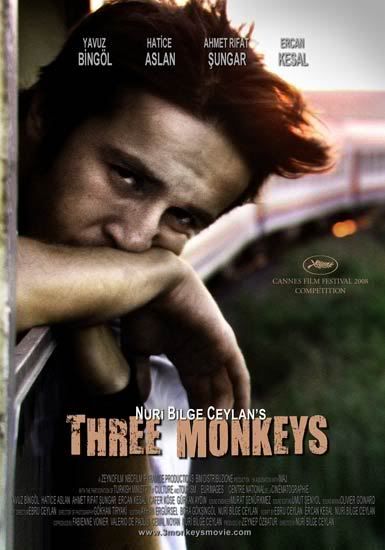
Three Monkeys: the elephant in the room

submit to reddit

Title: Üç maymun (Three Monkeys)
Director: Nuri Bilge Ceylan
Language: Turkish
Year: 2008
Critical Reception: Screened at Vancouver Film Festival 2008, metacritic rating of 73%, Winner of Cannes 2008 for Best Director
Psych Index: Intimate
In Brief: The film unfolded at a steady pace by the assured hand of the Turkish photographer cum director Nuri Bilge Ceylan, who directed the wonderful, equally austere Cannes’ Grand Jury Prize winner Uzak (Distant, 2002). Three Monkeys won him yet another Cannes prize earlier this year, this time as a director, making him one of the international directors to watch. His background as a photographer showed in the composition of the shots and the mood captured in each frame. With Monkeys, he’d strung together a series of moving pictures, hazily beautiful, at once intimate and detached, like memories-filled traveling postcards.

Comment (SPOILERS ALERT):
The title refers to the Japanese proverbial three wise monkeys that are the pictorial maxim for “see no evil, hear no evil, speak no evil.” While there exist multiple interpretations of the maxim, the one that seemed most close to the film was something of an elephant in the room. Without giving too much of the plot away, until the very end of the film, it would be hard pressed to really know what monkeys the film was referring to: the cover-up, the affair, the murder, or the missing piece to the family puzzle. May be all of them.

For a plot that was full of deceit, intrigue and passion, Three Monkeys was stripped down to the minimum, leaving only the slow decay of a family to fully occupy the screen. The events served as only as anchors for the film, for the real action that propelled the film forward was invisible on the page. Though it became apparent half way through the film’s emotional catalyst may have started before the first screen appeared, the film’s story technically began on a dark, winding road where a politician hit the first serious snag of the election, literally. Fearful that a hit-and-run would ruin his political career, he hired his driver to be the sacrificial lamb in exchange for a handsome sum at the end of jail time. While the driver served his sentence, leaving his wife and teenage son to manage for themselves with his monthly salary, the wife and the politician got involved in a discrete little tryst. It was not too discrete, for the son discovered his mother’s little secret, much to his dismay. When the father finally came back, there was little to do to contain the emotions boiling over. One mistake lead to another, and the price to be paid for silence became the hot potato that got passed on to the nearest frog in a hole.

The film unfolded at a steady pace by the assured hand of the Turkish photographer cum director Nuri Bilge Ceylan, who directed the wonderful, equally austere Cannes’ Grand Jury Prize winner Uzak (Distant, 2002). Three Monkeys won him yet another Cannes prize earlier this year, this time as a director, making him one of the international directors to watch. His background as a photographer showed in the composition of the shots and the mood captured in each frame. With Monkeys, he’d strung together a series of moving pictures, hazily beautiful, at once intimate and detached, like memories-filled travelling postcards.

The estranged characters functioned as loners in spite of their clumsy attempt to reach out for each other. Twice, the image of a single alley cat prancing across the screen contrasted with the character’s shape sharing the same frame. The cry of a cat can be awfully lonely and haunting, and its presence in the film – along with the surprisingly creepy and sad missing-piece-of-the-family-puzzle – gave Monkeys a spiritual dimension befitting of the best psychological horror films. The cast felt like real people, breathing and aching like real people, packing an emotional punch to each of their performances, even if their circumstances felt a bit unreal.

There could be some comparisons drawn between the film and Robert Redford’s Ordinary People. Both films dealt with family guilt, grief, and disintegration, though they could not be more different in style of expression. Whereas Ordinary People had an earthy, warm colour to the picture, Three Monkeys‘ brown was more green in shades. The latter also was decidedly less chatty about reasons and feelings, in keeping with the oblivion alluded to by the film’s title. If you’d prefer to do the analysis yourself rather than leaving it up to a film to spell it out, Three Monkeys would probably fit your sensibilities better. Even if you’d left the film puzzled by some loose ends, at the very least it would’ve been a strangely hypnotic, if not pretty, journey.

Clip:

Read More...

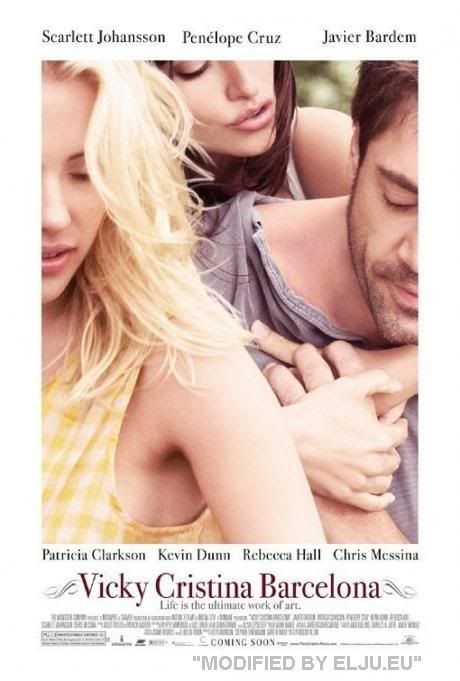
Vicky Cristina Barcelona: When Woody Allen Meets Scarlett Johansson

submit to reddit

Title: Vicky Cristina Barcelona
Director: Woody Allen
Language: English, Spanish
Year: 2008
Critical Reception: Penelope Cruz won Best Supporting Actress Oscar for her role in the film, kudos from major critics including Village Voice's Scott Foundas, The New Yorker's David Denby, Variety's Todd McCarthy, appearance on some year end top 10 lists.
Psych Index: Gender, Intimate
In Brief: It would seem that despite our wantons, we are a creature of habit, unable to break out of the social ties we entangled ourselves in. At least, that was the picture depicted here by Woody Allen, whose love life was a true taboo-ridden tabloid heaven. It was no surprise to see him grappling with the struggle between doing what looked right and doing what felt right. Vicky was a continuation of this depiction, and no new ground was broken here that was not covered in Match Point, except for perhaps the idea of a third wheel being the stabling point for a volatile relationship and an all-too-brief famous kissing scene that made titillated boys of Scarlett Johansson and Penelope Cruz’s fans everywhere. I am not beyond jumping into a threesome involving these women. Did I mention that Javier Bardem was part of this scenario? Try saying no to that.
Comment (SPOILERS ALERT):
At first, I thought Vicky Christina Barcelona was a romance novel on screen, complete with erotic, juicy romancing in exotic places. Closer inspection would prove me incorrect, however. Romance novels tend to have two things in them that Vicky deviated from: a female narrator and an optimistic ending. The third person narrator allowed the film to be framed like a picture in a different world – a world pregnant with possibilities that may be a tiny bit far-fetched in this world. The cynicism of its conclusion complicated its warm, breezy, pink-laced feel of anything-goes romanticism. It would seem that despite our wantons, we are a creature of habit, unable to break out of the social ties we entangled ourselves in. At least, that was the picture depicted here by Woody Allen, whose love life was a true taboo-ridden tabloid heaven. It was no surprise to see him grappling with the struggle between doing what looked right and doing what felt right. Vicky was a continuation of this depiction, and no new ground was broken here that was not covered in Match Point, except for perhaps the idea of a third wheel being the stabling point for a volatile relationship and an all-too-brief famous kissing scene that made titillated boys of Scarlett Johansson and Penelope Cruz’s fans everywhere. I am not beyond jumping into a threesome involving these women. Did I mention that Javier Bardem was part of this scenario? Try saying no to that.

This mini review was actually meant to highlight what Cristina uttered in one moment of brutal honesty: she was not gifted in the same way Maria Elena was, though she could appreciate what art was. In some ways, one could see her being the mouth-piece for Woody himself, who often found himself toiled in some circles in the shadow of his favourite filmmaker, Ingmar Bergman. Bergman was a master of chamber cinema depicting relationship struggles involving the self’s deepest wantons, not unlike Woody’s chosen cinematic frame. I could not help but thought of Bergman as the Maria Elena to Woodys’ Cristina, and similarly, filmmakers being the Maria Elena to film critics’ Cristina. This was a passionate thank-you to muses everywhere. As we discovered in the film, Cristina did have an unexpected gift or two in her, waiting for the inspiration of spring to blossom. Sometimes, a touch of passion is all you need to kindle the fire within. Even if in the end our habits got the best of us, we would’ve known what it was like to be awaken. There’s no unringing the bell, and our life is that much richer for having known it, even if we’re no less lost than when we began.

The question remained though, what to make of the women in this film? Was he accurate in his depictions of women’s inner lives? Which of these women do you tend to identify yourself with? Is it fair to say they are all shades of every woman? Would you have said no to the proposition?

Clip:

Read More...

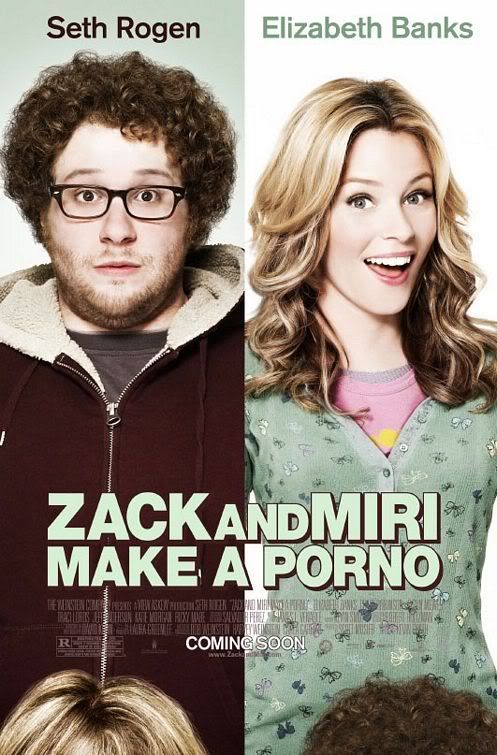
Zack and Miri make a porno: sit com, with nudity

submit to reddit

Title: Zack and Miri make a porno
Director: Kevin Smith
Language: English
Year: 2008
Critical Reception: Panned by most major critics, with a metacritic rating of 56.
Psych Index: Intimate
In Brief: At times, Zack and Miri seemed to bathe in gold tint, the same one that encapsulated sitcoms and other mainstream feel-good shows on your smaller tube. It also had the same quirky sheen of other feel-good indie flicks over the past few years. The stage was an innocent, vanilla coffee shop. The cast was, save for all the nudity, Friends-ish. Perhaps this was its one clever move, cinematically, making a case for the notion of porn making its presence well known in the mainstream culture.

Comment (SPOILERS ALERT):
Let us fuck. No? Okay now that I’ve used up the one effective and funny catch phrase from Zack and Miri Make A Porno (Smith, 2008), let’s just talk about sex. After all, this was what the film set out to do – to state a case for meaningful sex, in the age of seemingly frivolous humpings, and have it set against an industry made exclusively to entertain sex acts and the idea thereof.

Zack Brown (Seth Rogen), in trying to convince Miri Linky (Elizabeth Banks) that porn was their best option available for some quick cash, claimed that pornography was already present in the mainstream culture. In some ways, its creator waged the success of the film on this notion. To this end, yes, Mr. Smith, porno has gone mainstream. Or, at least as mainstream as it could be. I knew it was so when bottomless parties were the rage in a seemingly innocuous buddy film, Harold and Kumar part deux. Of course, there was also that well circulated sex tape that made Paris Hilton the queen of the tabloid and other news media alike. Point well taken – and demonstrated within the film. At times, Zack and Miri seemed to bathe in gold tint, the same one that encapsulated sitcoms and other mainstream feel-good shows on your smaller tube. It also had the same quirky sheen of other feel-good indie flicks over the past few years. The stage was an innocent, vanilla coffee shop. The cast was, save for all the nudity, Friends-ish. Perhaps this was its one clever move, cinematically, making a case for the notion of porn making its presence well known in the mainstream culture.

The film also featured the same scenario we have seen from the recent Judd Apatow films: ordinary, if not slightly dowdy, guys beating their heart on their sleeves, and in the procress, melt some awestruck pretty girl’s heart (why must the supposed ‘girl next door’ be always so clearly not dowdy?). Clearly, it was meant for the people who went because the title had “porno” in it, as well as people who would not admit to going to see the film for the same reason. It was also made for Kevin Smith fans (which, apparently, included the Weinstein Bros.?), as it featured excessive geeky talk and everything. Oh yes, there was a Star Wars spoof.

But, was there something else to the film? Something about sex changing everything? On this front, the film presented a half-hearted argument at best. The unfortunate part about the quirky, loveable cast was the way it was pit against the humanity of its two main characters. It was like pitching cardboard particles against real pine. It’s not much of an argument if the side of meaningful sex got some warm body to enact it, and in the other corner, cartoonish sex machines being over-the-top silly, or dumb, or sometimes both.

In a way, the porn industry was used in the film the same way Zack and Miri envisioned it: a fantasy dreaming of real human connections. As far as fantasy goes, none of these sideshow characters was given a fair chance – they were barely shown to be human beings, just jokes and dicks. Sex is, of course, meaningless if there’s no human involved. To be fair, the film was not about the porn industry, so one should not expect a fair exploration of the individuals involved. You could argue that Zack and Miri were part of the show, so perhaps they could represent some parts of it. The problem was, they stopped when the going got real. I suppose this could be the portrait of the modern amateurs, but it still did not make a convincing case for sex chaning everything, beyond the obvious “well, duh, of course sex could change existing relationships! Surprise!” Casual, meaningless sex could still exist between breathing human beings. What was this movie about again? Oh, right, sweet human relationships. With nudity. And dangling balls, yes. But you can still take your platonic buddy-or-not friend to it. It won’t change anything, promise.

Clip:

Read More...


Recently Seen (out of *****)

  • One night in Miami (King, 2020) ***
  • Mank (Fincher, 2020) ***1/2
  • Coming 2 America (Brewer, 2021) **1/2
  • Ma Rainey's Black Bottom (Wolfe, 2020) ***1/2
  • I care a lot (Blakeson, 2020) **

Copyright © 2016 Cinema Psychologia All rights reserved.
Converted To Blogger Template by Anshul Theme By- WooThemes